
Studio Note #48: A Good Name Has to Survive the Real World.
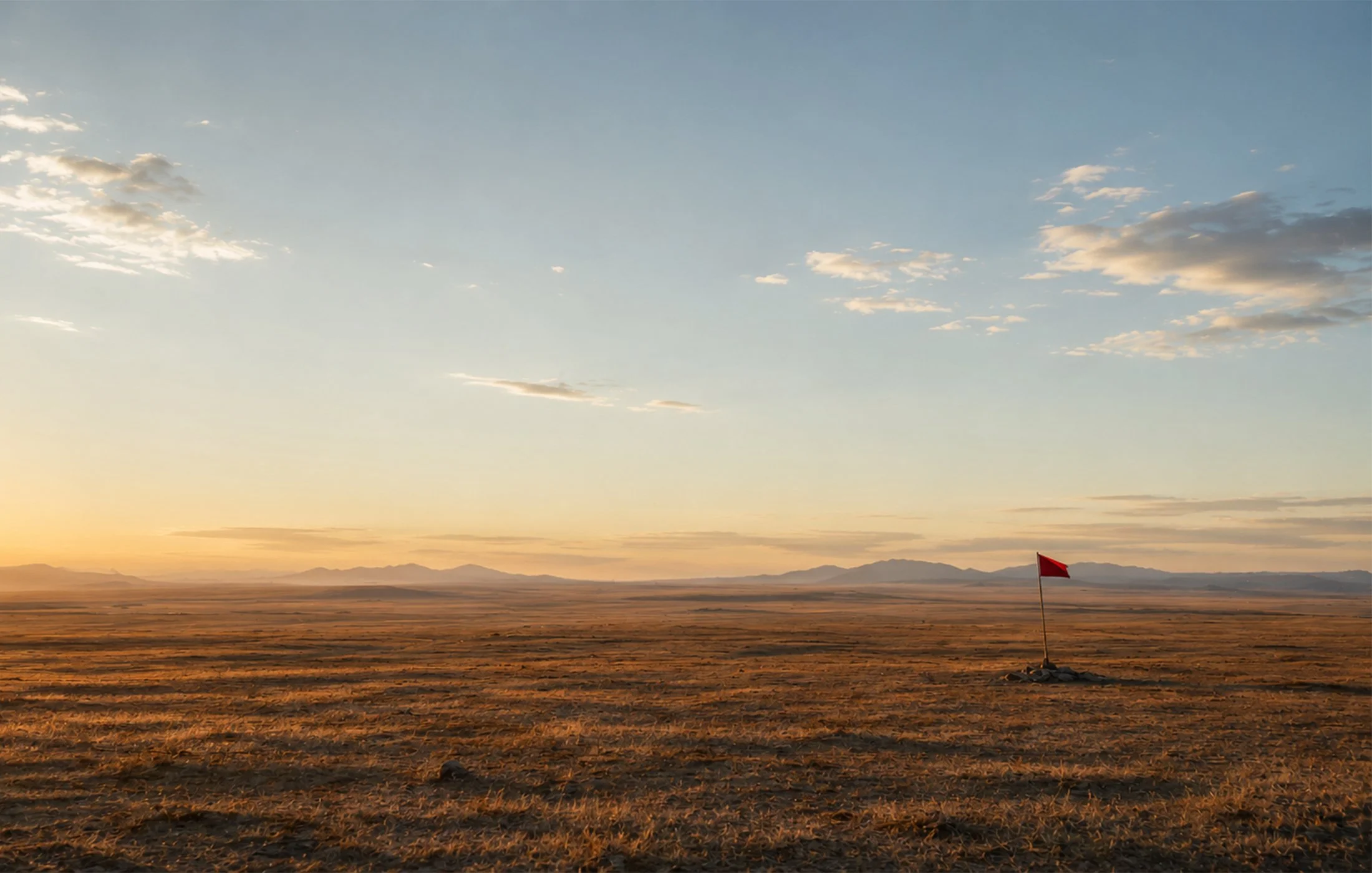
A good name has enough open ground around it to plant a flag.
Coming up with names is one of the most deceptively difficult parts of building a brand. It’s also one of the things everyone thinks they’re pretty good at.
Get a few people in a room and it doesn’t take long before someone starts throwing words at the wall. Eventually, one sticks. Everyone likes it. It sounds good, it looks good written down and maybe there’s even a great story behind it.
We found it.
Maybe.
I’ve been working through naming for a new brand this week, and once we landed on a direction we liked, the creative part stopped and the decidedly less exciting part began. Who else is using it? Is anyone using something confusingly similar? Is the domain available? Are there existing businesses registered under the name? Are there federal trademarks that could create a problem? What happens when you actually search for it?
Because there’s a pretty significant difference between a name you like and a name you can own.
And “own” doesn’t necessarily mean securing every conceivable legal right to a word. It means having enough room around the name to build an identity people can recognize as yours. A name has to work in the actual environment where the business is going to live, surrounded by competitors, search results and other companies fighting for the same attention.
A generic name might perfectly describe what your company does while making it nearly impossible to distinguish yourself from everyone else doing it. A clever name might sound great in a presentation but require an explanation every single time someone hears it. A name might be completely available legally and still be buried underneath twenty unrelated businesses when someone types it into Google.
Or, probably worst of all, you can fall in love with something, build an identity around it, print it on things, put it on trucks, launch a website and discover six months later that someone else has a much stronger claim to it.
None of this means you can eliminate every possible risk before choosing a name. At some point you have to make a decision and start building. But there’s a lot of ground between blindly falling in love with something and trying to guarantee that absolutely nobody, anywhere, has ever used the same combination of letters.
That ground is where the work happens.
Naming is creative, but it’s also strategy, research and due diligence. The goal isn’t simply to find a word everyone in the room likes. It’s to find something that fits the business, connects with the audience, gives the brand somewhere to go and has enough open ground around it for you to plant a flag.
Coming up with the name is the fun part.
Making sure you can actually build something on it is the work.