
Studio Note #59: Visual Intelligence is a Thing.
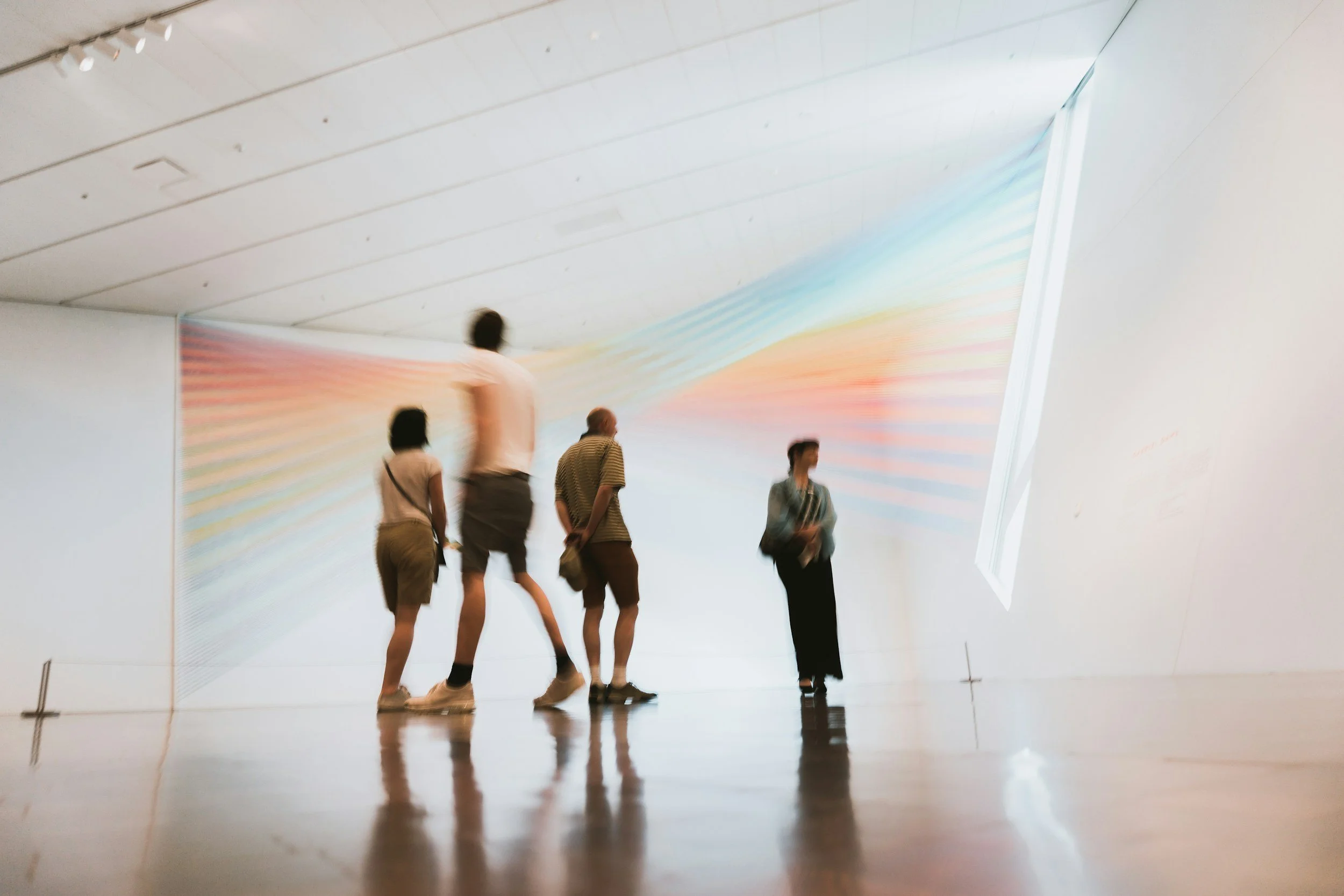
This installation by artist Gabriel Dawe is composed entirely of thread and steel hooks, meticulously and mathematically entwined to create a prismatic effect that shifts as light and the viewer move around it.
It has nothing to do with graphic design. Which is precisely why a designer should be interested in it and draw inspiration from it.
There’s a quote from Stefan Sagmeister I’ve carried around for years:
To be a good designer, you would need to have deep and far-reaching interests outside of the profession.
That idea feels especially relevant right now.
AI has made it incredibly easy to make things that look designed. Logos. Ads. Social posts. Websites. Brand concepts. Give it a prompt and within seconds you can have something on your screen that looks surprisingly finished.
And that’s useful. I use AI every day for research, ideation, automation etc.
But looking finished and being good design are not the same thing.
There are practical reasons for that. The image that looks tack sharp on your phone may fall apart when you send it off to become a four-foot banner. The logo you generated may not exist as a proper vector. There may be no layered working file. No understanding of bleeds, color spaces, substrates, production methods or what happens when the thing leaves the screen and becomes an actual object.
That knowledge matters.
But Sagmeister’s quote gets at something bigger.
The best designers I’ve known aren’t just interested in design.
We’re interested in architecture. Music. Film. Photography. Fashion. History. Politics. Food. Technology. Psychology. Business. Weird roadside signs. Old packaging. Skateboard graphics. T-shirt graphics. The way a restaurant hands you the check. The typography on a 50-year-old instruction manual. Why one room feels comfortable and another doesn’t.
We notice things.
And over time, all of those things become part of the library we’re designing from.
That’s difficult to replicate with a prompt because good design isn’t simply the ability to produce an image. It’s the ability to make connections between things that might not appear connected at all.
A designer might solve a packaging problem with something they noticed in a museum ten years ago. An identity might be influenced by a film title sequence, a piece of industrial equipment or the lettering on the side of an old building. Sometimes the thing that makes the work interesting has absolutely nothing to do with graphic design.
That’s the “far-reaching” part of Sagmeister’s quote.
And I think it’s also why the conversation about AI replacing designers often misses the point.
The value of a designer was never just knowing how to operate Illustrator or Photoshop. Those were tools. AI is another tool, albeit an extraordinarily powerful one.
The value is in knowing what should be made, why it should look the way it does and whether what came out is actually any good.
Then there’s the decidedly less sexy part: knowing how to make the damn thing work.
Because eventually that beautiful little image on your screen has to survive contact with the real world.
And the real world doesn’t accept prompts.