
Studio Note #52: The Thing Before the Thing.
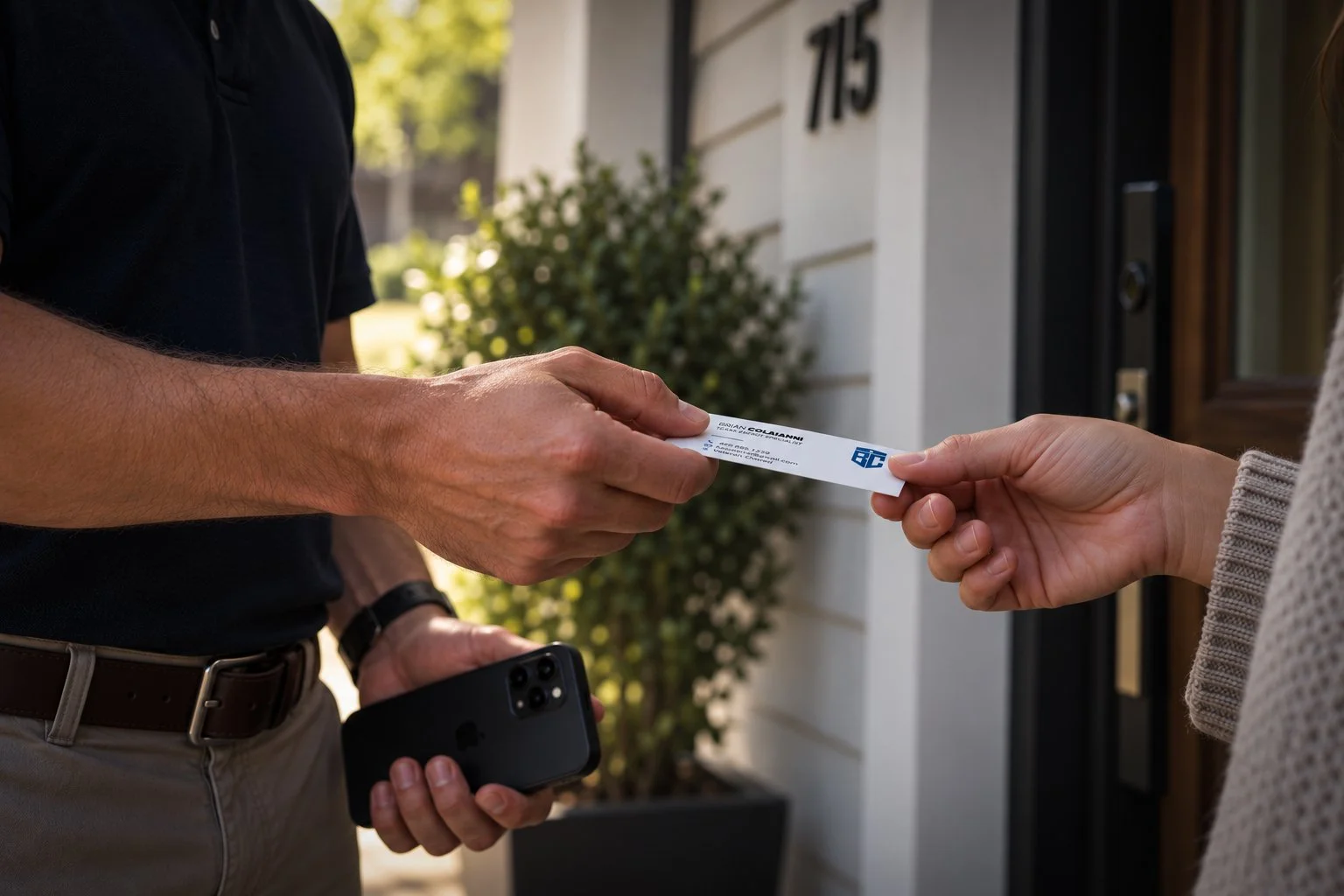
Sometimes you don’t need the whole business. You just need enough to knock on the first door.
There’s always a thing before the thing.
Before the website, there’s the identity. Before the campaign, there’s the positioning. Before the case study, there’s the first client. Before the polished portfolio, there’s somebody willing to trust you when there isn’t much of a portfolio yet.
We tend to talk about businesses as if they arrive fully assembled. Name, logo, website, photography, social channels, reviews, customers and a fleet of beautifully wrapped trucks parked outside at golden hour.
That’s rarely how it actually happens.
A few years ago, before Anchor Energy existed, Brian Colaianni came to us with an idea. He thought there might be an opportunity, but he wasn’t ready to build an entire company around a hunch. He wanted to knock on some doors, have some conversations and see if there was actually something there.
So we made him some business cards, with a BC monogram and basic contact info.
That was it.
He didn’t need a website. He didn’t need a giant brand system. He certainly didn’t need a launch campaign for a business he wasn’t sure he was going to launch. He needed to walk into a room, hand somebody something that looked credible and start a conversation.
The business cards were the thing before the thing.
There’s a tendency when starting something new to think you need everything at once because we associate completeness with credibility. But sometimes building everything is exactly the wrong move. You’re investing time and money into answering questions the business hasn’t even encountered yet.
The better question is: what does this business need to take the next meaningful step?
Sometimes that’s a full identity and website. Sometimes it’s a focused landing page. Sometimes it’s a profile within a larger network while the company establishes itself. And sometimes it’s a stack of business cards and enough confidence to start knocking on doors.
The point isn’t to make a new business look bigger, older or more established than it actually is. It’s to give it enough infrastructure to move forward and let what happens next tell you what needs to be built after that.
In Brian’s case, he found the traction he was looking for.
Anchor Energy came next.
We talk a lot about brands needing to evolve when businesses reach an inflection point, but starting is one of those points too. The trick is recognizing that “starting” doesn’t necessarily mean building the finished version.
Sometimes the smartest thing you can build isn’t everything.
It’s exactly what the business needs to move forward.