
Studio Note #39: Presentation Creates Expectation.
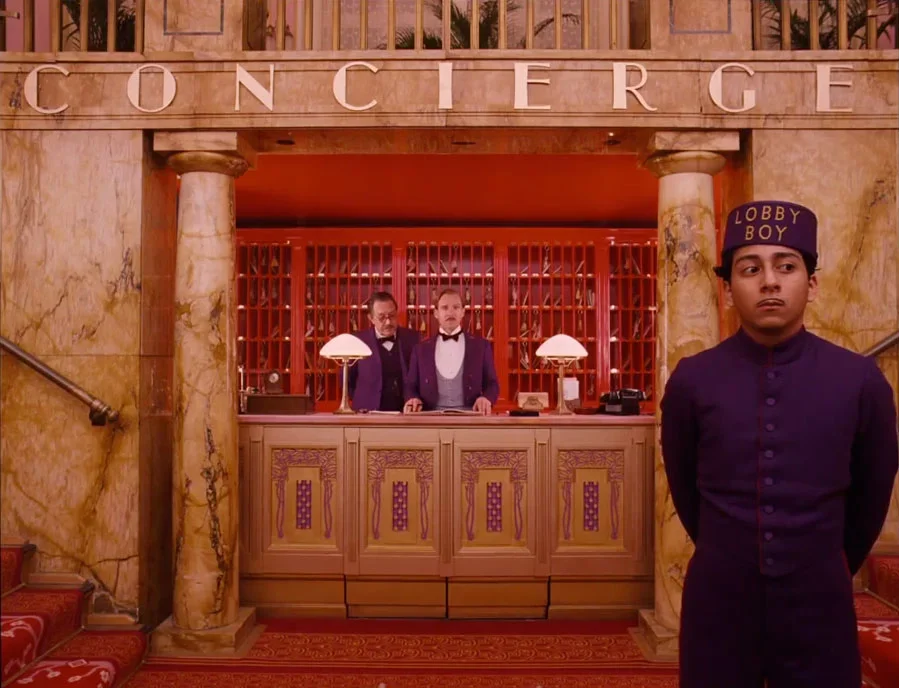
While this still from Wes Anderson’s film, The Grand Budapest Hotel, is an exaggerated monument to the idea that presentation creates expectation. The environment, uniforms, posture, signage and ritual are already telling you, these people know what they're doing.
I had a meeting recently with a local nonprofit about a potential rebrand, and a big part of the conversation centered around trust.
Trust matters to every business, obviously, but I think the stakes are different for a nonprofit.
A nonprofit is often asking people to give something without receiving a conventional product or service in return. Donate money. Volunteer your time. Support a program. Recommend the organization to someone who needs help. Believe that whatever you're contributing will actually be put to good use.
That's a significant ask, and before someone knows much about the organization, they're already making judgments about whether they trust it.
Does this organization look established? Does it seem competent? Does it feel legitimate? Do these people appear capable of doing what they say they're going to do?
Branding starts answering those questions long before someone has read an annual report or met the people doing the work.
There's always been an interesting tension around branding in the nonprofit world. Spending money on design can feel like money that should have gone somewhere else. There's almost an expectation that a nonprofit looking a little homemade demonstrates that it's being responsible with its resources.
I understand the instinct, but I think it can work against the organization.
If you're asking someone to trust you with their money, their time or potentially the wellbeing of someone they care about, looking credible isn't frivolous. It's part of making that person comfortable enough to take the next step.
That doesn't mean an organization needs an expensive logo or a beautiful website to be trustworthy. Plenty of incredible organizations are doing important work with limited resources, and plenty of beautifully branded organizations aren't particularly deserving of anyone's trust.
Good branding can't make an organization trustworthy.
It can make a trustworthy organization easier to trust.
That's the distinction.
When the identity, website, messaging and materials feel considered and professional, they reinforce the idea that the organization itself is considered and professional. They remove a layer of doubt that otherwise has to be overcome before someone ever gets to the mission.
For a nonprofit, that matters. The person encountering you for the first time may be deciding whether to make a donation, become a volunteer, establish a partnership or seek your help. If something about the organization makes them hesitate, they may never stick around long enough to discover how good the work actually is.
Branding isn't the mission, and it shouldn't pretend to be. But presentation creates expectation.
If stronger branding helps people approach an organization with greater confidence in the work it's doing, then it isn't taking something away from the mission.
It's helping more people trust it enough to take the next step.