
Studio Note #24: What Did You Mean?
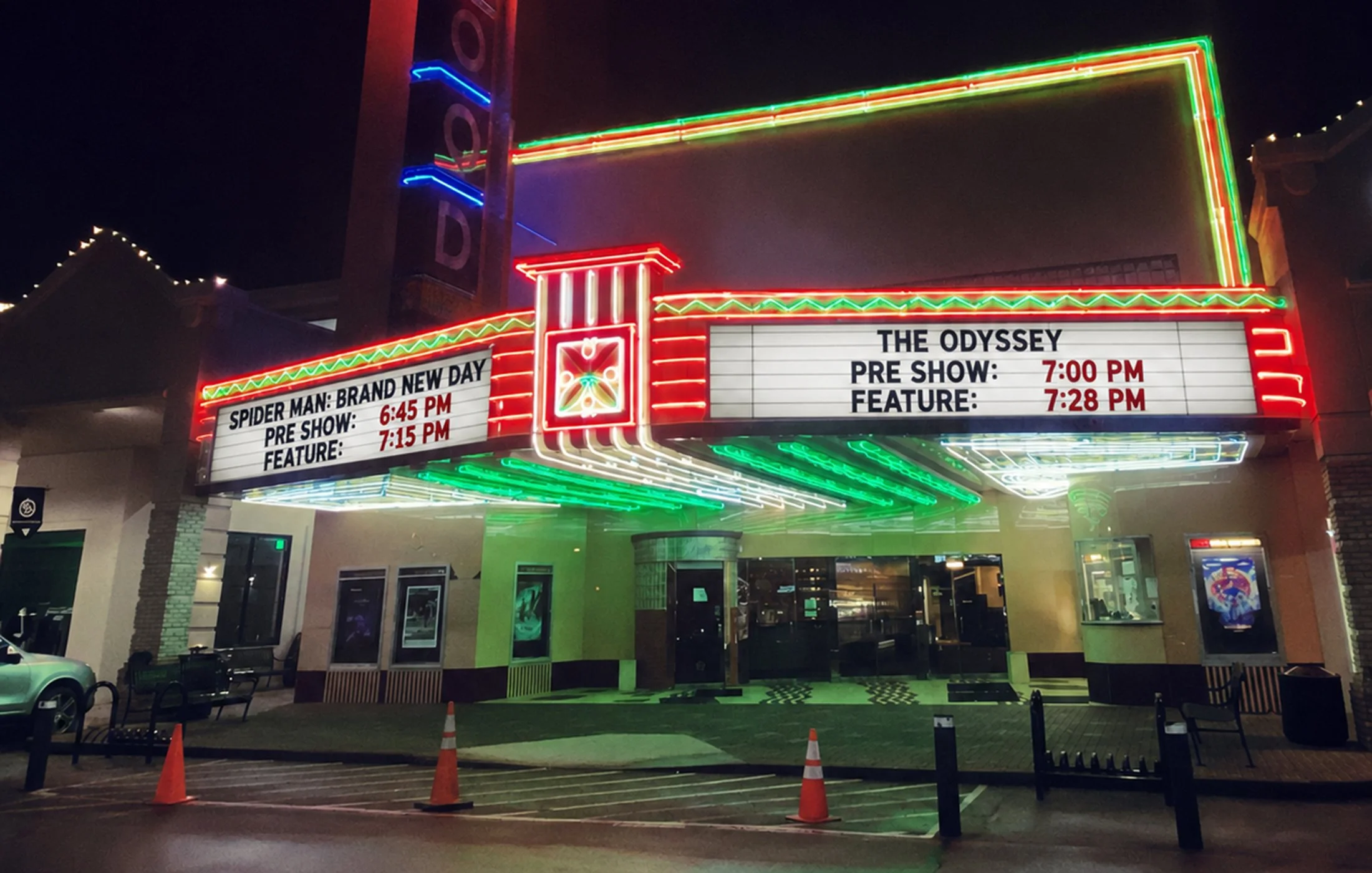
I mean seriously, how great would this be?
Opening weekend I took Maritza and my mom to see The Odyssey.
Like most people, I've gotten used to treating movie start times as suggestions. If the ticket says 7:00, I assume I've got twenty minutes of trailers before the movie actually begins.
So I wasn't worried when we pulled into the parking lot at 6:58.
The ticket window was closed, which meant I had two options: buy tickets at the kiosks or at the concession stand. Since I was paying cash, the kiosks weren't an option, so we waited in the concession line. By the time we got our tickets and headed into the theater, I figured we'd missed a trailer or two.
Instead, we'd missed the first five minutes of the movie.
It turns out this theater starts its movies almost immediately. No twenty-minute buffer. Just a few trailers, and then the feature.
It wasn't their fault.
In fact, they're the only theater I've been to in recent memory that actually started the movie at, or very close to, the advertised showtime.
The strange part is that it still felt wrong.
Not because they misled me, but because every other theater had trained me to expect something different.
That got me thinking about how often businesses accidentally create the same problem.
We tell customers something will be ready "tomorrow," when we really mean sometime before the end of the day.
We say we'll call "this afternoon," even though it might be 4:45.
We tell someone we'll get back to them "soon," assuming they'll interpret that the same way we do.
Most of the time, we're trying to be flexible. We think we're leaving ourselves a little room.
The customer experiences something else entirely. They hear a promise, build an expectation around it and then spend the rest of the time wondering whether that expectation was the right one.
The more I thought about it, the more I wished movie theaters would simply list two times.
Doors and previews: 7:00 PM
Feature presentation: 7:24 PM
Everyone would know exactly what to expect. If you enjoy the trailers, show up at seven. If you don't, walk in a few minutes before the feature starts. Nobody has to guess.
It seems like such a small thing, but removing uncertainty almost always makes for a better experience.
The same is true for businesses.
Clear expectations don't just reduce confusion. They make people feel like someone thought about their experience before they arrived.
And that's one of the simplest ways to build trust.