
Studio Note #17: People Trust Evidence Before They Trust Expertise.
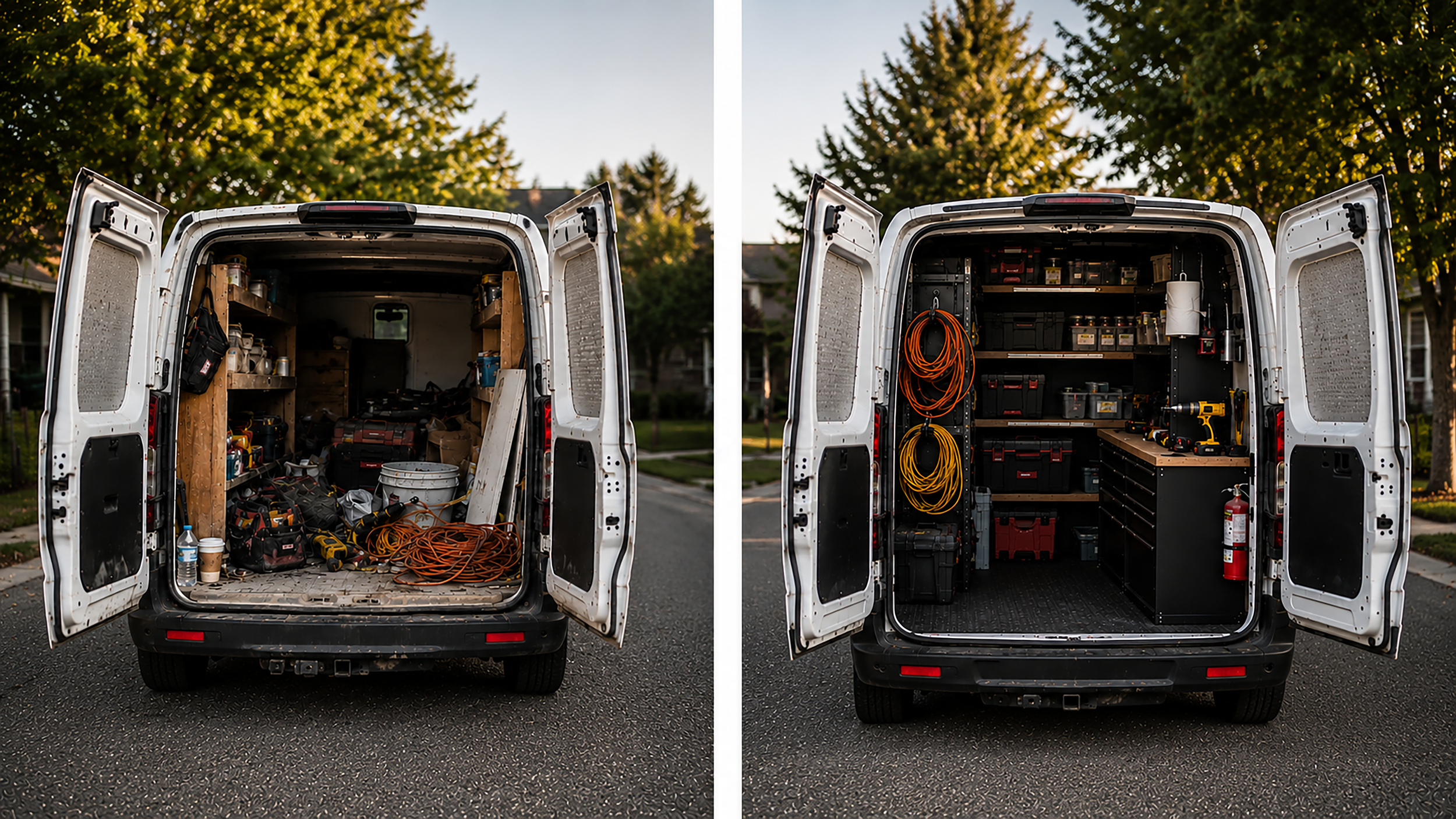
Inspiring confidence when you show up, is more than half the battle.
Everyone has had a contractor pull into the driveway and immediately thought, “Yikes.”
The truck is a mess. Tools are scattered everywhere. Fast food wrappers cover the dashboard. Extension cords are tangled into a pile, and nothing appears to have a place.
Now, that contractor might do incredible work. They may be the best in town. But that’s not where your mind goes first. Instead, you can’t help but wonder whether they bring the same level of organization to the work they’re about to do.
Most service businesses face the same challenge: they’re asking customers to evaluate something those customers aren’t qualified to judge.
When you hire an electrician, you probably can’t tell good electrical work from great. If you’re interviewing a CPA, you don’t know whose tax strategy is strongest. Most homeowners couldn’t confidently tell you whether a roof was installed correctly.
So people do what people have always done. They look for evidence they can evaluate.
They notice the truck. The website. The proposal. Whether you answered the phone professionally. Whether you arrived when you said you would. Whether your emails are clear and your invoices are organized.
None of those things prove you’re exceptional at your job. A messy truck doesn’t make someone a bad contractor any more than a beautiful website guarantees great service. But when customers don’t have the expertise to judge your work directly, these become the signals they rely on. They’re making the best decision they can with the evidence available.
This is why branding matters so much for service businesses. It’s not about appearing bigger or more expensive than you are. It’s about making the invisible qualities of your business visible before a customer ever experiences the work itself.
If you’re meticulous, people should see it. If you’re organized, they should feel it. If you’re professional, every interaction should quietly reinforce that impression.
Before clients experience your craftsmanship, they experience everything surrounding it. Those details aren’t the work, but they become the evidence people use until they’ve had the chance to see your work for themselves.
Whether we like it or not, that’s how trust begins.